Building a virtual classroom from the ground up
Designing a 0-to-1 learning experience for live classes and collaboration.

Project Overview
Tich is a virtual classroom focused on bringing the best experience to instructors and students, so they can teach and learn better in remote settings. The primary objective for Tich is to:
- Build a remote-learning tool that provides an educational oriented workflow for real-time classes, where the instructor has the proper tools to share any kind of content and the student can easily interact with both.

Project Execution
Business case
- Traditional online learning methods, relying on communication tools, have shown limitations in effectively replicating the quality of face-to-face learning due to the lack of suitable didactic tools within virtual environments.
- The global online education market is poised for significant growth, with an anticipated annual increase of 9.23% during the forecast period. By 2025, it is projected to reach a substantial market size of US$319.167 billion, up from US$187.877 billion in 2019.
- Remote work and remote education have become increasingly prevalent practices in both corporate and academic settings, establishing themselves as enduring trends.
Users & audience
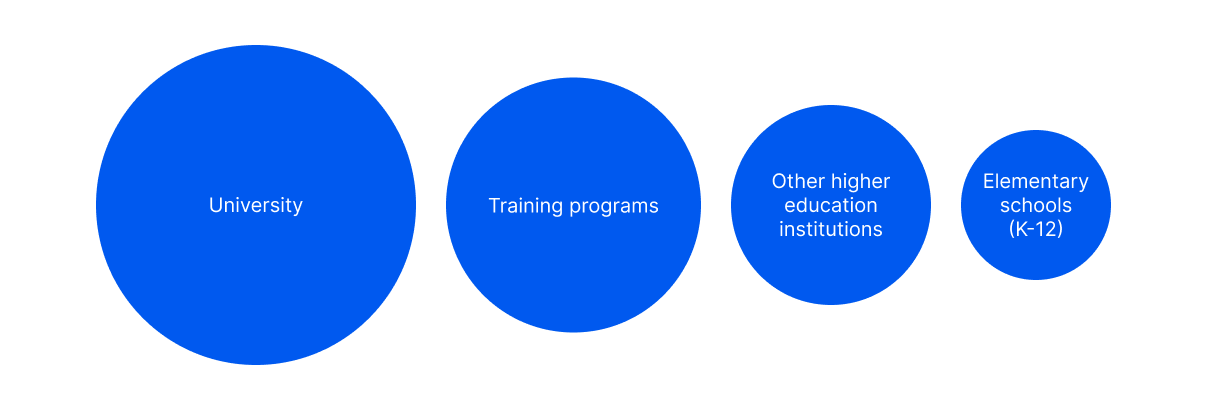
Previous research has helped us identify several key user groups who share a common interest in remote learning. These include:
- Training programs
- Elementary schools (K-12)
- Universities
- Other higher education institutions
Among these groups, our primary focus is on instructors who teach workshops as part of training programs, as well as those who teach classes in universities and higher education settings.
How might we leverage instructor-student interaction?
I started a process based on a Design Thinking approach.
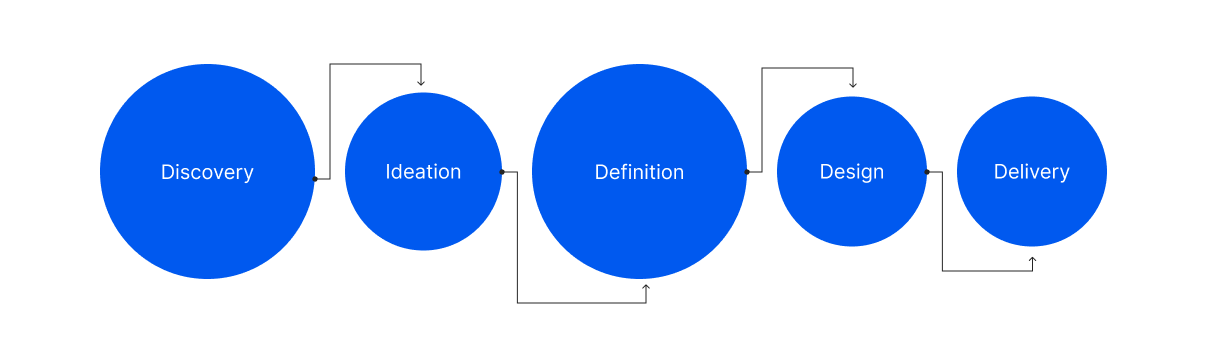
Discovery
Qualitative Research
To enhance instructor-student interaction, we initiated our research by conducting interviews with 8 individuals who have prior experience using Tich. Our goal was to gain insights into their current pain points and how they utilized familiar tools from other platforms to alleviate them.
Through this research, we found that video monitoring emerged as a highly effective tool for instructors, aligning with their existing familiarity with similar functionalities found in other platforms. Moreover, we identified two distinct types of moments within a class: discussion and presentation (monitoring), each playing a significant role in the overall learning experience.

Competitive audit
After recognizing the value of video as a useful tool, our next step involved conducting a comprehensive competitive analysis. Our aim was to understand the reasons behind its success and how this functionality was implemented in both direct and indirect competitors' tools.
Through this analysis, we uncovered valuable insights, including opportunities for improvement, identified flaws in existing educational tools, and established a foundation of best practices. These findings served as a crucial reference point for our current endeavors.
Ideation and definition
Epic
Upon synthesizing the research findings, we identified three key areas of opportunity that we consolidated into an overarching initiative called "Class View":
- Facewall - Enhancing class monitoring moments
- Polls & reactions - Facilitating engagement and interaction
- Personalization - Fostering motivation and individualization
Following this epic proposal, we decided to initiate our efforts by creating the Facewall module, which would involve integrating video functionality.
Design
Several research insights and technological constraints played a crucial role in shaping the interface design. These considerations included:
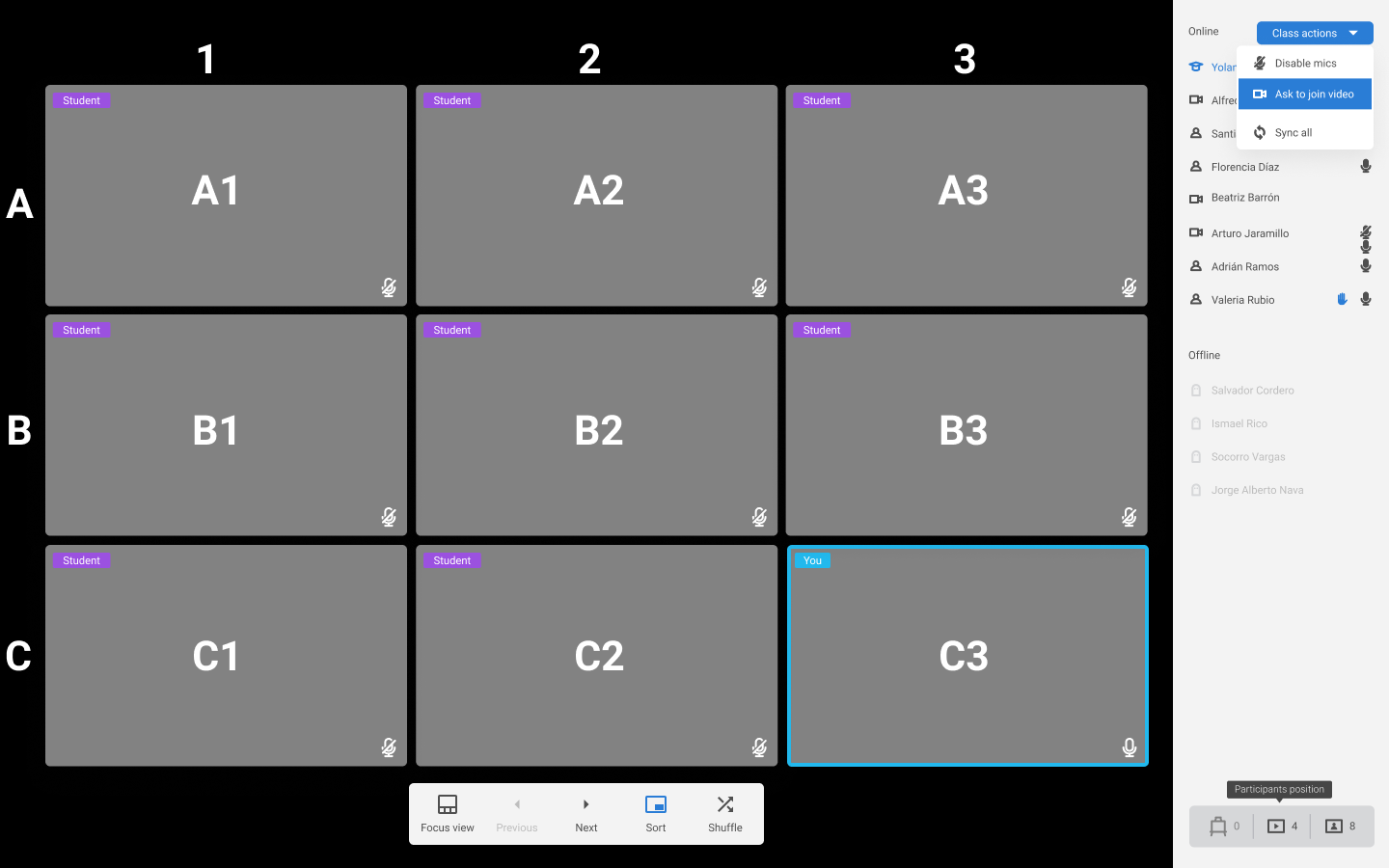
- Cognitive load limitations: Displaying more than 9 thumbnails at once hampers monitoring capacity.
- Pagination for video display: Stream distribution is controlled via requests through the media servers, necessitating a pagination design pattern for displaying additional videos.
- Stream settings: Defined minimums and maximums for DPIs and FPS to maintain optimal application performance and server stability as the number of stream connections increases exponentially with more activated cameras.
- Equal visibility for all participants: To prevent disadvantages for students based on instructor visualization screen, we implemented a prioritization algorithm primarily based on participation, ensuring equitable visibility for both participating and non-participating students.
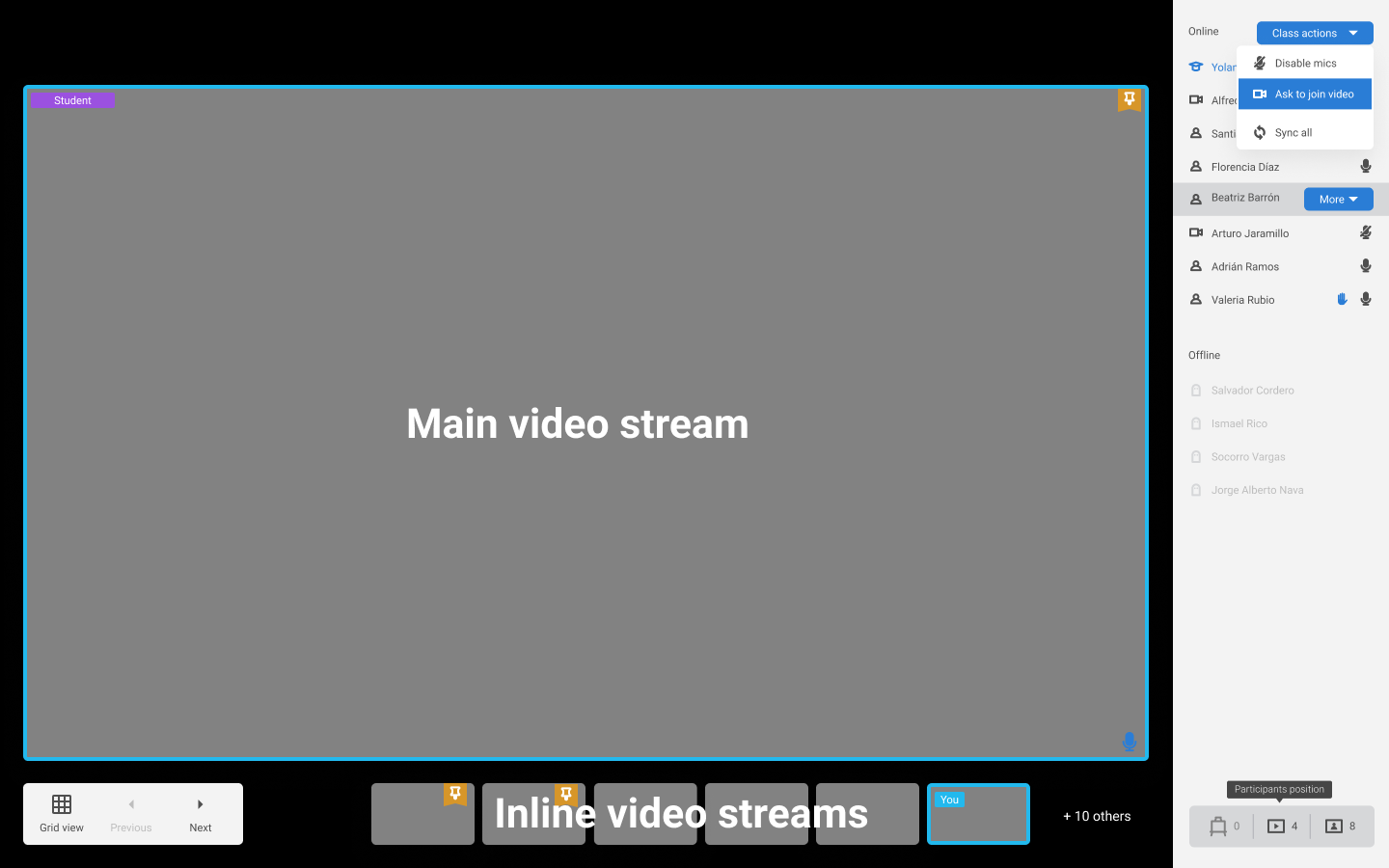
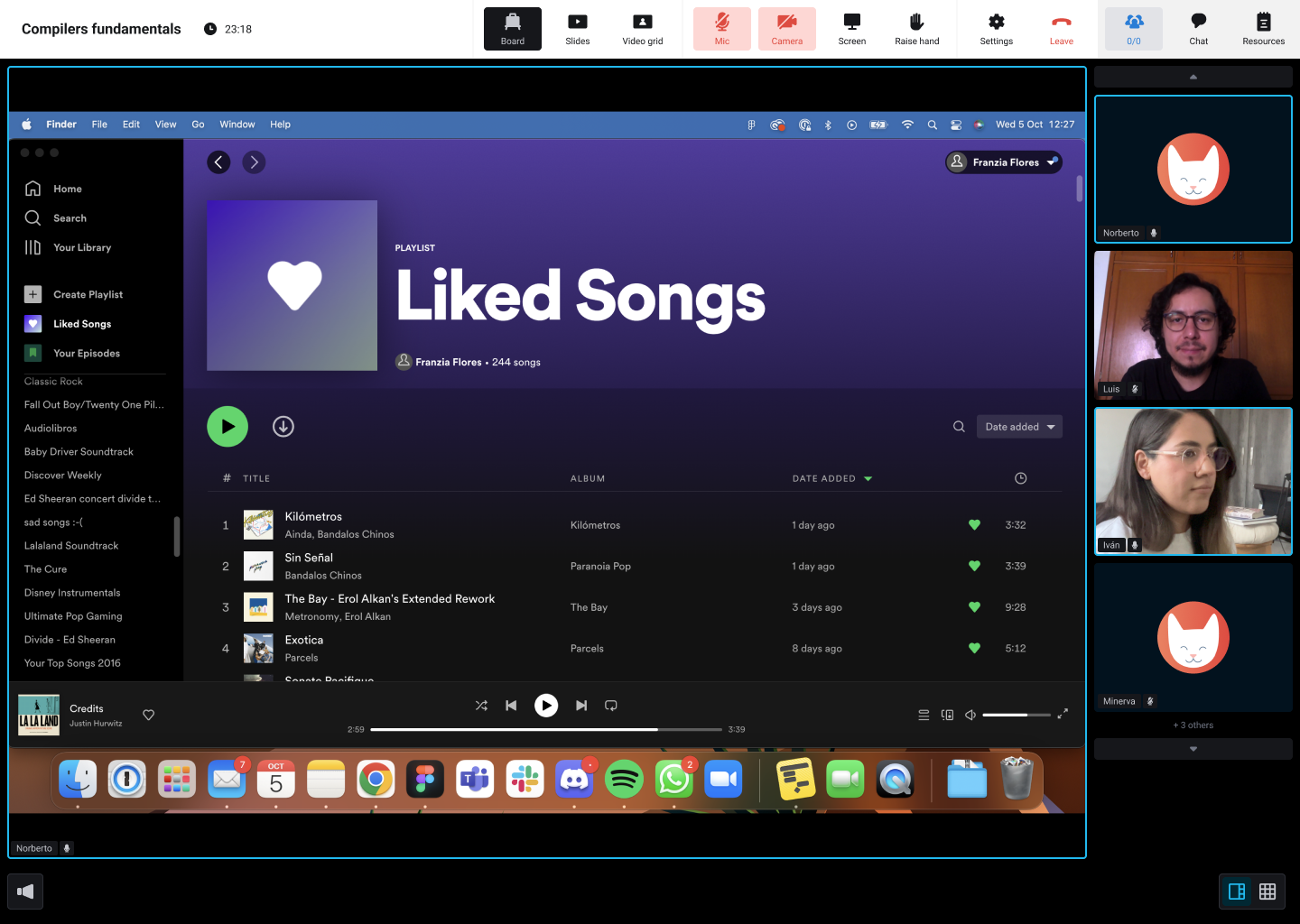
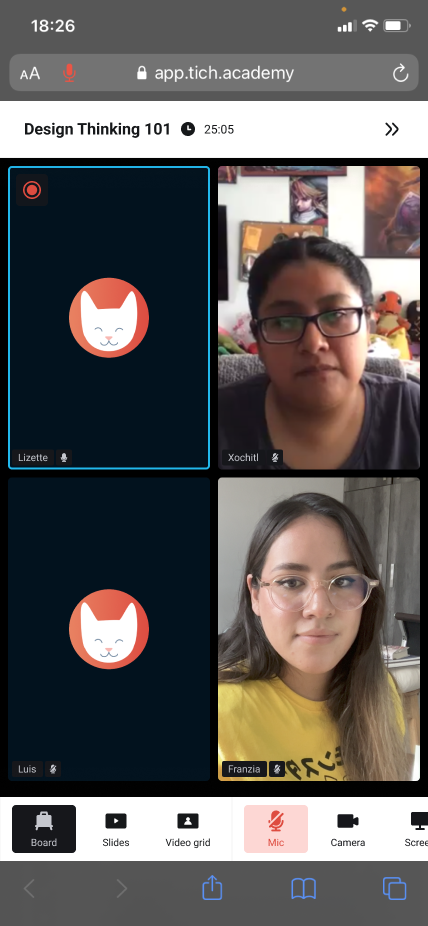
Taking into account the primary class moments of discussion and monitoring, we crafted two distinct layouts:
- Waffle view: A 3x3 grid providing visibility of nine participants simultaneously.
- Focus view: Displaying one stream as the main focus on a larger portion of the screen.
I began by sketching low-fidelity wireframes, incorporating all the gathered information and constantly connecting with the development team to talk about limitations, response times, understanding stream connections and bandwidth.
Results
As the design progressed, I iterated and transformed the wireframes into high-fidelity versions, building upon our existing Design System, Haichi Kirei. After thorough testing with current Tich users, we refined the final design and ensured its adaptability across various viewports.


Delivery
Design + Engineering Collaboration
To foster effective collaboration between design and engineering, we follow a workflow that emphasizes close coordination:
- Documentation and delivery of specifications: We utilize GitLab issues to document and deliver detailed specifications for each feature or functionality.
- User story breakdown: Each specification is further broken down into user stories, ensuring a granular understanding of the requirements and user needs.
- Collaborative sessions: We conduct 1 to 3 collaborative sessions where the team collectively reviews and discusses the functionality, specifications, and definitions. This allows for valuable input from both design and engineering perspectives.
- Continuous involvement of engineering: Throughout the design process, we maintain active involvement from the engineering team. This collaborative approach enables them to propose and analyze solutions alongside the design team, fostering a holistic and efficient definition and development process.
Key learnings and conclusions
- The research and validation process outlined is a typical example of my approach for introducing changes or feature additions to the product.
- I employ a combination of techniques and methodologies tailored to the specific challenges the product faces.
- This project has provided me valuable insights, particularly highlighting the importance of design and engineering collaboration.
- The workflow and communication within the team are exceptional, distinguishing it from other projects I've worked on.
- Our first Beta program successfully attracted 400 individual users, meeting one of our goals.
- Engaging with users enabled us to identify areas for improvement within the product.