
On working in a non-native language
A couple of months ago, I embarked on an intensive research and preparation phase for my first facilitation of a Design Thinking workshop (thanks Nearsoft). During this period, I came across a new way of applying the methodology in agile environments: the Design Sprint, created by Jake Knapp, John Zeratsky, and Braden Kowitz. The workshop ended up being a combination of Design Thinking and Design Sprint, and I'm pleased to say that it received a very positive response.
In my research, I discovered the Global Virtual Design Sprint (GVDS) initiative, created by Robert Skrobe. It consists of a series of Design Sprints where anyone can sign up to be part of a team with a similar time zone and develop a solution to challenges posed by people around the world. I participated in the second edition alongside colleagues living in the United States with diverse backgrounds (Indian, Chinese, American), and it was truly an intense week.
Regarding languages, this brings me to my next point: as a global team, the default language is English. Spanish is my native language, and I have no problem communicating in English. I read articles, watch videos, and can hold conversations without any major issues. While I may struggle with certain words and fluency, it doesn't hinder my ability to communicate. In my work, I'm often required to take calls in English, and I've never had a problem doing so.
The challenge arose — and I realized this when I found myself in a fast-paced dynamic — when I had to express my creativity in a non-native language and keep up with a conversation that flowed from one idea to another faster than you can imagine. It's a different experience to engage in a regular conversation compared to constructing the imagery of an abstract idea without shared cultural references at lightning speed. Initially, this made me feel frustrated, thinking to myself, "I have good ideas, but I can't contribute because by the time I clarified them in my mind, the team has already moved on to another topic, and the decision is practically made." I even considered that maybe I wasn't ready for this and should stop attending collaborative meetings.
The reason for sharing this vulnerability is that I feel this topic isn't discussed enough. I know highly competent individuals whose level of inhibition in another language can significantly reduce their competence. The good news is that everything has a solution, and you don't need to give up. I've come to understand something (which probably relates to cultural constructs): you don't need to be perfect, you just need to do it.
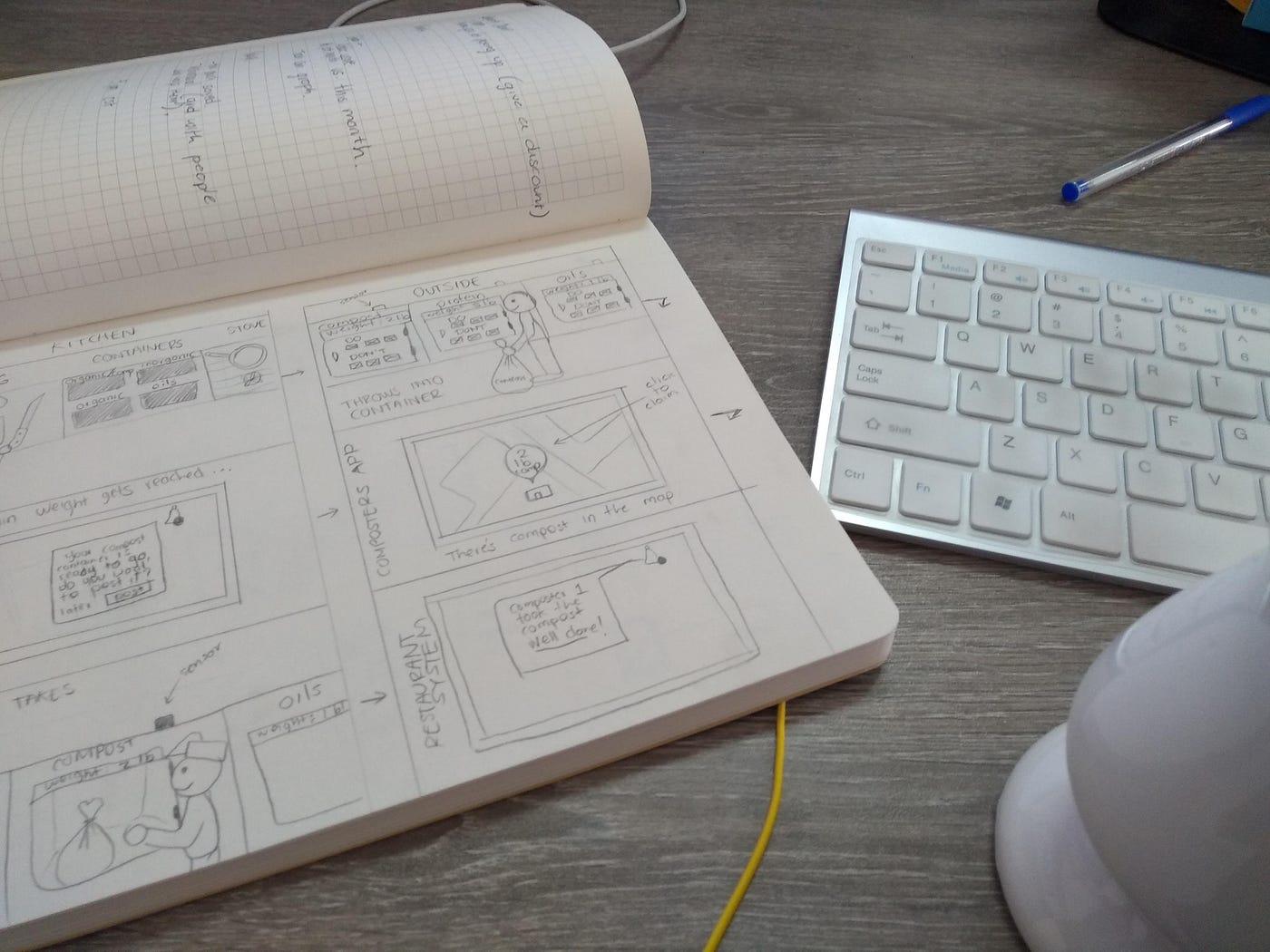
How did I overcome the frustration? Well, I mentioned what the first two out of five intense working days were like. On the third and fourth days, the ideation and prototyping phases arrived — my sweet spot, as they say around here — and I pushed through my pride to present my ideas. I talked a lot, asked many questions, and drew a lot.
It always comes down to communication.
Anyone who knows me knows that this is my golden rule: if something isn't working, we need to communicate it. So, I explained to my teammates (who were incredibly understanding) the barrier I was facing in expressing my ideas with the necessary clarity. I informed them that I would be using additional resources such as external articles, drawings, and many, many words to make myself understood.
The result? Excellent communication and coordination within the team, which enabled everyone to participate and achieve outstanding results. I wasn't the only one who hadn't yet expressed their ideas, but demonstrating vulnerability and clearly stating my needs served as a catalyst for others to do the same.
Wrapping up, this was my personal experience collaborating with a multidisciplinary and diverse team in terms of cultures, languages, and ways of thinking. While it may not pose a difficulty for everyone, it was for me, and I wanted to share it. I wouldn't trade the experience for anything, and I would do it again.
I believe that everything that happens to us and how we face it makes us grow and pushes us a little closer to our goal. We shouldn't be afraid to talk about our frustrations and failures.
If anything written here resonates with you, please share your own experience.
This article was originally posted here.